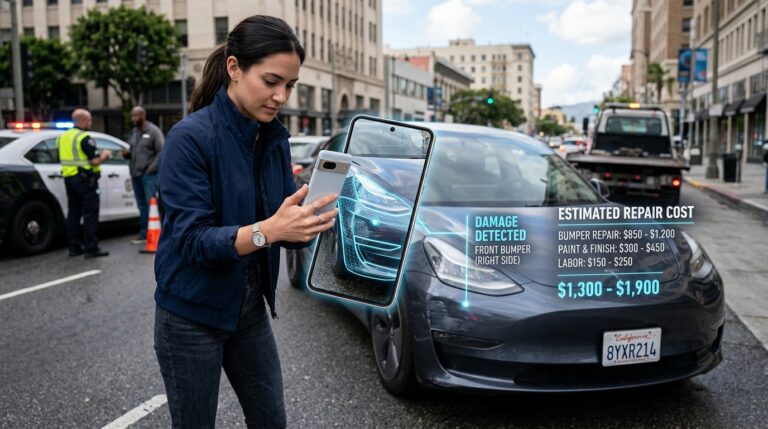
The Complete Guide to Car Insurance in 2026
Buying a car is exciting. Buying car insurance? Not so much. Most people treat it like a chore — something you handle once a year, sign off on, and forget about until a renewal notice shows up in your inbox or, worse, until something goes wrong on the road. But car insurance isn’t just a legal box to tick. It’s one of the few financial products that can genuinely save you from a life-altering bill, and understanding how it actually works puts real money back in your pocket.
This guide walks through everything you need to know about car insurance in 2026 — from the basics of what it is, to the different types of coverage available, how insurers calculate your premium, what deductibles really mean for your wallet, how the claims process unfolds step by step, the mistakes that trip up even experienced drivers, and answers to the questions people ask most often. Whether you’re shopping for your first policy or trying to make sense of the one you already have, by the end of this article you’ll have a much clearer picture of what you’re paying for and why.
What Is Car Insurance?
At its core, car insurance is a contract between you and an insurance company. You pay a regular fee — the premium — and in exchange, the insurer agrees to cover certain financial losses related to your vehicle, up to the limits and conditions written into your policy. It’s a way of transferring risk. Instead of you personally absorbing the full cost of an accident, a theft, or a natural disaster that damages your car, the insurance company shares that burden with you.
The concept isn’t new. Insurance in general has existed for centuries, built on a simple idea: when a large group of people each contribute a small amount of money into a shared pool, that pool can cover the losses of the unlucky few who actually experience a costly event. Car insurance works the same way. Millions of drivers pay premiums, and the insurer uses that collective fund to pay out claims when accidents happen.
In most countries, some level of car insurance is legally required simply to drive on public roads. This is usually liability coverage, which protects other people — not you — from the financial consequences of an accident you cause. But legal minimums are often just the starting point. Depending on your vehicle, your finances, and your risk tolerance, you may want (or need, if you have a car loan) additional layers of protection.
It’s worth remembering that car insurance isn’t one-size-fits-all. Two neighbors driving the same model of car can pay wildly different premiums and hold completely different types of coverage. That’s because insurance is priced and structured around individual risk, not around the vehicle alone.
Types of Coverage
This is where things get complicated for a lot of people, mostly because policies are often bundled together and sold as a single package, which makes it hard to see what you’re actually paying for. Let’s break down the main types of coverage you’ll come across.
Liability Coverage
Liability coverage is the foundation of nearly every car insurance policy, and in most places, it’s the only coverage that’s legally mandatory. It has two components:
- Bodily injury liability covers medical expenses, lost wages, and legal costs if you injure someone else in an accident you’re found responsible for.
- Property damage liability covers the cost of repairing or replacing another person’s property — usually their vehicle, but it could also be a fence, a mailbox, or a storefront you crash into.
The key thing to understand about liability coverage is that it does not pay for your own injuries or your own car’s damage. It exists purely to protect other people from the financial fallout of your mistakes behind the wheel.
Collision Coverage
Collision coverage pays for damage to your own vehicle after a crash, regardless of who caused it. Hit another car, hit a guardrail, or flip your vehicle on an icy road — collision coverage steps in to pay for repairs (or the vehicle’s value, if it’s totaled), minus your deductible.
This type of coverage is optional in most places, but if you have a car loan or lease, your lender will almost certainly require it. It makes sense: the lender has a financial stake in your vehicle until it’s paid off, and they want to know it’s protected.
Comprehensive Coverage
Comprehensive coverage — sometimes called “other than collision” coverage — protects your car from damage that has nothing to do with a crash. Think theft, vandalism, fire, falling tree branches, hailstorms, flooding, or hitting an animal on the road. If it’s not a collision with another vehicle or object, and it’s not your fault in a traditional sense, comprehensive is usually the coverage that applies.
Like collision, comprehensive coverage is optional unless a lender requires it, but for many drivers it’s worth carrying anyway, especially in areas prone to severe weather or high vehicle theft rates.
Personal Injury Protection (PIP) and Medical Payments Coverage
These cover medical expenses for you and your passengers after an accident, regardless of fault. PIP is broader in many regions, sometimes covering lost wages and even funeral expenses, while medical payments coverage is usually narrower and strictly limited to medical bills. Requirements vary significantly depending on where you live, with some regions mandating PIP and others treating it as optional.
Uninsured and Underinsured Motorist Coverage
Not every driver on the road carries adequate insurance — or any insurance at all. Uninsured motorist coverage protects you if you’re hit by someone without insurance, while underinsured motorist coverage kicks in when the at-fault driver’s coverage isn’t enough to pay for your damages and injuries. Given how common it is for drivers to carry only the legal minimum, this coverage often turns out to be more valuable than people expect.
Gap Insurance
If you finance or lease a new vehicle, its value drops the moment you drive it off the lot. Gap insurance covers the “gap” between what you owe on your loan and the vehicle’s actual cash value if it’s totaled or stolen. Without it, you could end up paying off a loan for a car you no longer have.
Add-Ons Worth Knowing About
Many insurers also offer optional extras, such as roadside assistance, rental car reimbursement while your vehicle is being repaired, and new car replacement coverage. These aren’t essential for everyone, but depending on your circumstances, they can be well worth the small additional cost.
How Premiums Are Calculated
Ever wonder why your friend pays half what you pay for what seems like a similar policy? Premium calculation is part actuarial science, part statistics, and it factors in dozens of variables that insurers have refined over decades of claims data.
Your driving record is one of the biggest factors. Accidents, speeding tickets, and DUIs signal higher risk to insurers, and that risk gets priced directly into your premium. A clean record, on the other hand, is one of the most reliable ways to keep your rates low.
Age and driving experience matter enormously. Statistically, younger and newer drivers are involved in more accidents, which is why teenagers and drivers in their early twenties tend to pay the highest premiums, often dropping noticeably once they hit their mid-twenties with a clean record.
Where you live plays a bigger role than most people realize. Urban areas with heavier traffic, higher theft rates, and more accidents typically carry higher premiums than quiet rural areas. Even your specific zip code or postal code can shift your rate.
The vehicle itself factors in too — its make, model, age, safety ratings, repair costs, and even how often that particular model gets stolen. A sports car with a powerful engine and a history of being a magnet for theft will usually cost more to insure than a sensible sedan with strong safety ratings.
Your credit history, in regions where insurers are permitted to use it, is another factor. Statistically, insurers have found a correlation between credit behavior and the likelihood of filing claims, so a stronger credit profile can sometimes translate into a lower premium.
How much you drive matters as well. Someone commuting sixty miles a day is on the road far more than someone who drives occasionally on weekends, and more time on the road generally means more exposure to risk.
Coverage levels and deductibles are, of course, directly within your control. Higher coverage limits and lower deductibles mean higher premiums, while the reverse brings your monthly cost down — a trade-off we’ll unpack in the next section.
Finally, your claims history follows you. Insurers keep records, and someone who has filed multiple claims in recent years is statistically more likely to file again, which pushes premiums upward even if none of those past incidents were technically “at fault.”
The good news is that many of these factors are things you can actually influence over time — driving safely, maintaining good credit, choosing a practical vehicle, and shopping around periodically can all work in your favor.

Deductibles
A deductible is the amount you agree to pay out of pocket before your insurance coverage kicks in on a claim. If you have a $1,000 deductible and $4,000 worth of damage, you pay the first $1,000 and your insurer covers the remaining $3,000.
Deductibles typically apply to collision and comprehensive coverage, not to liability coverage. And here’s the trade-off that trips a lot of people up: the higher your deductible, the lower your premium tends to be, because you’re absorbing more of the risk yourself. Choose a low deductible, and your premium rises, because the insurer is taking on more of the financial burden.
So which is better? It depends on your financial situation. A high deductible makes sense if you have enough savings set aside to comfortably cover it in an emergency, and you’d rather pay less every month. A low deductible makes more sense if an unexpected $1,000 or $2,000 bill would seriously strain your finances, even if it means paying a bit more each month for the peace of mind.
One thing worth keeping in mind: if the cost of repairing damage is close to or lower than your deductible, filing a claim may not even be worth it, since you’d essentially be paying for the repair yourself anyway — and filing could still affect your future premiums.
Claims Process
Nobody wants to file a claim, but knowing how the process works ahead of time makes an already stressful situation much easier to handle.
Step one: ensure safety and document the scene. Immediately after an accident, check for injuries and call emergency services if needed. Once everyone is safe, take photos of the damage, the vehicles involved, license plates, road conditions, and any visible injuries. Get the contact and insurance information of everyone involved, along with names and numbers of any witnesses.
Step two: report the incident to the police, if required in your area or if there’s significant damage or injury involved. A police report often becomes an important piece of documentation later in the claims process.
Step three: notify your insurer promptly. Most policies require you to report an incident within a specific window of time. Delaying this can complicate or even jeopardize your claim, so it’s best to contact your insurer as soon as reasonably possible, even if you’re not entirely sure you’ll need to file.
Step four: work with a claims adjuster. The insurer will assign an adjuster to evaluate the damage, review your policy details, and determine what’s covered. They may inspect your vehicle in person, request photos, or ask for repair estimates from a shop.
Step five: get repair estimates. Depending on your insurer, you may be able to choose your own repair shop or be directed to one within their network. Estimates are compared against the adjuster’s assessment to determine the final payout.
Step six: receive your settlement. Once everything is finalized, you’ll either receive a payment directly, or the insurer will pay the repair shop on your behalf, depending on how your policy is structured. If your car is deemed a total loss, you’ll be offered a settlement based on its assessed value instead.
The entire process can take anywhere from a few days for straightforward cases to several weeks or longer for more complex claims involving injuries, disputes over fault, or multiple parties. Staying organized, responsive, and keeping copies of every document exchanged goes a long way toward keeping things moving smoothly.
Common Mistakes
Even careful drivers make missteps when it comes to insurance. Here are some of the most common ones worth avoiding.
Choosing coverage based on price alone. The cheapest policy often comes with the lowest coverage limits, which can leave you dangerously exposed after a serious accident. It’s worth comparing what’s actually covered, not just the monthly premium.
Not shopping around at renewal. Loyalty doesn’t always pay off in the insurance world. Rates can shift significantly year to year, and insurers sometimes quietly raise premiums on existing customers while offering better deals to attract new ones. Comparing quotes every year or two can uncover meaningful savings.
Underestimating how much coverage you actually need. Carrying only the legal minimum might satisfy the law, but it may not come close to covering the real cost of a serious accident, leaving you personally liable for the difference.
Forgetting to update your policy after major life changes. Moving, buying a new car, adding a driver to your household, or changing how often you commute can all affect your risk profile and, in turn, your premium. Failing to update your policy can lead to gaps in coverage or even claim denials if the insurer discovers unreported changes.
Letting coverage lapse. Even a short gap in coverage — missing a payment, forgetting to renew — can lead to higher premiums down the line, since insurers view lapses as a red flag, in addition to the legal risk of driving uninsured.
Not understanding your deductible until it’s too late. Some drivers choose a low premium with a high deductible without fully considering whether they could actually afford that deductible if an accident happened tomorrow.
Filing small claims unnecessarily. As mentioned earlier, filing a claim for minor damage that’s close to your deductible amount can sometimes cost you more in the long run through increased premiums than simply paying out of pocket.
Ignoring available discounts. Many insurers offer discounts for bundling policies, maintaining a clean driving record, completing defensive driving courses, insuring multiple vehicles, or even installing anti-theft devices. Not asking about these can mean leaving real savings on the table.
Frequently Asked Questions
Is car insurance mandatory everywhere? In most countries and regions, at least a minimum level of liability insurance is legally required to drive on public roads. The specific requirements and minimum coverage amounts vary widely, so it’s worth checking the rules where you live.
Does my premium go up after every accident? Not necessarily. If you’re not at fault, or if you have accident forgiveness as part of your policy, your rate may not increase. However, at-fault accidents typically do lead to higher premiums at your next renewal.
Can I switch insurers mid-policy? Generally, yes. Most policies allow you to cancel and switch to a new provider, though you may face a small cancellation fee or a prorated refund of any premium you’ve already paid, depending on your insurer’s terms.
What happens if I’m caught driving without insurance? Penalties vary by location but often include fines, license suspension, vehicle impoundment, and higher premiums once you do get insured again, since insurers view a coverage lapse as a sign of higher risk.
Does the color of my car affect my premium? This is a persistent myth. Insurers don’t actually factor in paint color when calculating premiums. What matters is the vehicle’s make, model, engine size, safety features, and repair costs.
Should I file a claim for every accident, no matter how small? Not always. If the damage is minor and close to or below your deductible, it may be more cost-effective to pay out of pocket rather than risk a premium increase from filing.
How can I lower my premium without dropping coverage? Raising your deductible, maintaining a clean driving record, bundling policies, asking about available discounts, and comparing quotes from multiple insurers periodically are all effective ways to reduce costs without sacrificing protection.
Final Thoughts
Car insurance can feel like a maze of jargon and fine print, but at its heart, it’s a simple trade: you pay a manageable, predictable amount now to protect yourself from an unpredictable, potentially devastating cost later. The more you understand about how coverage types, premiums, deductibles, and claims actually work, the better equipped you are to choose a policy that genuinely fits your life — rather than one you simply signed because it was the first option in front of you.
Take the time to review your policy at least once a year, ask questions when something doesn’t make sense, and don’t be afraid to shop around. A little effort spent understanding your coverage today can save you a significant amount of money and stress the next time you’re out on the road.