50 Frequently Asked Questions About Car Insurance
Car insurance generates more confusion than almost any other everyday financial product, mostly because the terminology is dense and the rules shift depending on where you live, what you drive, and what kind of policy you carry. Rather than trying to cover everything in one long narrative, this guide answers 50 of the questions people search for most often, organized into categories so you can jump straight to what you need.
The Basics
1. What is car insurance, exactly? Car insurance is a contract where you pay a regular premium to an insurance company, and in exchange, they agree to cover certain financial losses related to your vehicle — like accident damage, injuries, or theft — up to the limits specified in your policy.
2. Is car insurance legally required? In most countries and regions, yes, at least a minimum level of liability insurance is required to legally drive on public roads. The specific minimums vary significantly depending on where you live.
3. What happens if I drive without insurance? Penalties typically include fines, license suspension, and vehicle impoundment, and if you’re involved in an accident while uninsured, you could be personally responsible for the entire cost of any damage or injuries you cause.
4. How is my premium determined? Insurers calculate your premium using a combination of factors, including your age, driving record, location, credit history where permitted, the type of vehicle you drive, and how much you drive annually.
5. What’s the difference between an insurance premium and a deductible? Your premium is the amount you pay regularly, usually monthly or annually, to maintain your coverage. Your deductible is the amount you pay out of pocket toward a claim before your insurance coverage kicks in.
6. Can I own a car without insurance? In many places, you can own a car without insuring it as long as it’s not being driven on public roads, though this varies by region, and some places still require proof of insurance to register a vehicle at all.
7. Do I need insurance for a car I never drive? If the vehicle is registered and could legally be driven, most regions still require it to be insured, even if it mostly sits parked. Check your local requirements, since some places offer reduced “storage” coverage for vehicles that aren’t actively driven.
Coverage Types
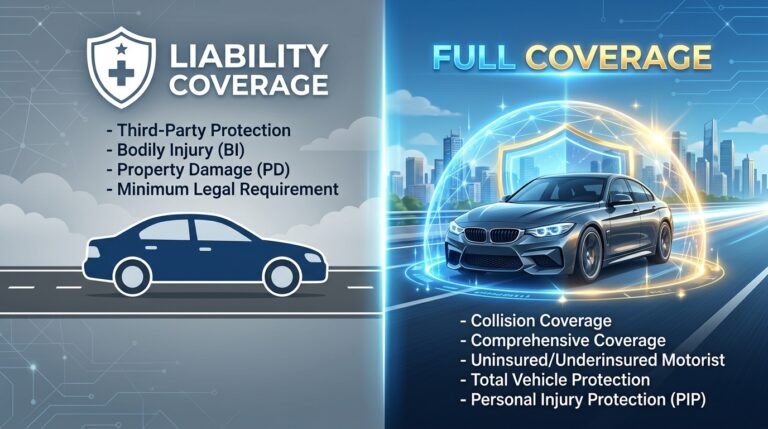
8. What does liability coverage cover? Liability coverage pays for injuries and property damage you cause to other people in an accident you’re responsible for. It does not cover your own injuries or your own vehicle’s damage.
9. What does full coverage actually include? Full coverage typically refers to a combination of liability, collision, and comprehensive coverage, providing protection for both other people’s losses and your own vehicle’s damage.
10. What’s the difference between collision and comprehensive coverage? Collision covers damage to your vehicle from an accident, regardless of fault. Comprehensive covers damage from non-collision events like theft, vandalism, fire, hail, or hitting an animal.
11. Do I need uninsured motorist coverage? It’s generally a good idea, since it protects you financially if you’re hit by a driver who has no insurance or not enough insurance to cover your damages, which is more common than most people expect.
12. What is gap insurance, and do I need it? Gap insurance covers the difference between what you owe on a car loan and the car’s actual value if it’s totaled. It’s especially valuable in the early years of financing a new vehicle, when depreciation often outpaces loan payoff.
13. What is personal injury protection (PIP)? PIP covers medical expenses, and sometimes lost wages, for you and your passengers after an accident, regardless of who was at fault. It’s required in some regions and optional in others.
14. Is roadside assistance worth adding to my policy? For many drivers, yes — it’s a relatively inexpensive add-on that covers services like towing, jump-starts, and flat tire changes, which can otherwise be costly if paid for individually.
15. What is rental car reimbursement coverage? This add-on covers the cost of a rental car while your vehicle is being repaired after a covered accident, which can be valuable if you rely on your car daily.
16. Does my policy cover me if I drive someone else’s car? Often, yes, liability coverage generally follows the driver in many policies, but this varies by insurer and policy, so it’s worth confirming directly rather than assuming.
17. Does my insurance cover items stolen from inside my car? Typically, no. Car insurance generally covers the vehicle itself, not personal belongings inside it, which are usually covered instead by homeowners or renters insurance.
Costs and Premiums
18. Why did my premium go up even though I didn’t file a claim? Premiums can rise due to factors outside your control, like increased claims costs in your area, inflation in repair and medical costs, or changes to your risk profile, such as aging into a new bracket or a change in your credit-based insurance score.
19. Does my credit score affect my car insurance rate? In many regions, yes, insurers use a credit-based insurance score as one factor in pricing, based on a statistical link between certain credit behaviors and claims likelihood. Some regions prohibit this practice entirely.
20. Why is my teenager’s insurance so expensive? Statistically, younger and less experienced drivers are involved in more accidents, so insurers price that increased risk into premiums for young drivers significantly more than for experienced adults.
21. Does the color of my car affect my premium? No, this is a common myth. Insurers look at the make, model, engine size, safety features, and repair costs of your vehicle, not its paint color.
22. Will my rate go up after an accident that wasn’t my fault? It depends on your insurer and your policy, but in many cases, no-fault accidents have less impact on your rate than at-fault ones, and some insurers offer accident forgiveness that prevents any increase at all for a first incident.
23. How much does car insurance typically cost? Costs vary enormously based on your age, location, driving record, and vehicle, so there’s no single accurate number, but getting multiple quotes for your specific situation is the most reliable way to know what to expect.
24. Can I lower my premium without reducing my coverage? Yes, through strategies like bundling policies, asking about discounts, enrolling in usage-based insurance programs, and choosing a deductible that matches your financial comfort level.
25. Do I pay more for insurance if I drive a lot for work? Generally yes, since higher annual mileage increases your statistical exposure to accidents, though usage-based programs can sometimes offer more precise, and occasionally lower, pricing for careful drivers regardless of mileage.
26. Does marriage affect my car insurance rate? In many cases, yes, married drivers statistically file fewer claims on average, and some insurers offer lower rates as a result, though this varies by company and region.
Claims and Accidents
27. What should I do immediately after an accident? Check for injuries, move to safety if possible, exchange information with the other driver, document the scene with photos, and contact the police if required or advisable given the circumstances.
28. How long do I have to report an accident to my insurer? This varies by policy, but most insurers require notification within a specific window, often just a few days, so it’s best to report any accident as soon as reasonably possible.
29. Do I have to file a police report after every accident? Not always, but it’s often required for accidents involving injuries, significant damage, or a hit-and-run, and many regions have a specific dollar threshold above which a report is mandatory.
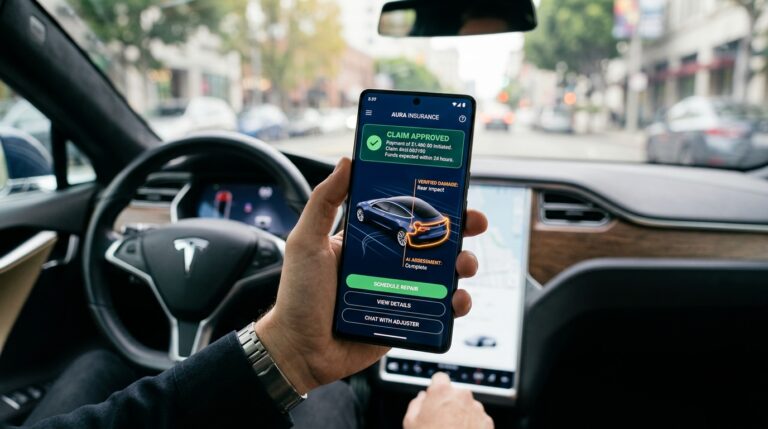
30. What is a claims adjuster, and what do they do? A claims adjuster is the person assigned by your insurer to evaluate your claim, review documentation, inspect damage, and determine the appropriate settlement based on your policy’s coverage.
31. How long does the claims process usually take? Straightforward claims can resolve within a week or two, while more complex claims involving injuries, disputed fault, or a total loss can take several weeks or longer.
32. Can I choose my own repair shop? Often yes, though some insurers offer incentives or guarantees for using shops within their preferred network. It’s worth asking directly what your options are.
33. What happens if my car is declared a total loss? If the cost to repair exceeds a certain percentage of your car’s value, your insurer will typically declare it a total loss and pay you the car’s assessed market value at the time of the accident, minus your deductible.
34. Can I negotiate my claim settlement if I think it’s too low? Yes, you can generally provide supporting documentation, like an independent repair estimate or evidence of comparable vehicle values, to negotiate for a higher settlement.
35. Should I file a claim for very minor damage? Not always. If the repair cost is close to or below your deductible, filing may not be worth it, since it could still affect your future premium even though the payout would be small.
36. What if the other driver doesn’t have insurance? This is exactly the situation uninsured motorist coverage is designed for. Without it, you may have to pursue the other driver directly for compensation, which can be difficult and time-consuming.
Policy Management
37. Can I switch insurance companies mid-policy? Generally, yes. Most insurers allow you to cancel and switch, though you may face a small cancellation fee or receive a prorated refund of any unused premium, depending on the company’s terms.
38. What happens to my premium if I move to a new address? Your premium is likely to change, since location is a significant pricing factor, reflecting differences in traffic density, crime rates, weather risk, and local repair costs between areas.
39. Do I need to update my insurer if I buy a new car? Yes, and promptly. Coverage doesn’t automatically transfer with full accuracy to a new vehicle in most cases, and failing to update your policy could create a coverage gap.
40. What is an SR-22, and when do I need one? An SR-22 is a document your insurer files with the state confirming you carry the minimum required insurance, typically required after a serious violation like a DUI or driving without insurance.
41. How often should I review my policy? At least once a year, or after any major life change like moving, changing jobs, adding a driver, or paying off a car loan, since these events can all affect what coverage and pricing make sense for you.
42. Can I remove a driver from my policy? Yes, typically if that person no longer regularly drives your vehicle, such as a child who has moved out and gotten their own policy, though you’ll usually need to formally request the change with your insurer.
43. What is accident forgiveness? Accident forgiveness is a feature, sometimes automatic and sometimes purchased, that prevents your premium from increasing after your first at-fault accident, depending on the insurer’s specific terms.

Specific Situations
44. Do I need car insurance if I only drive occasionally? Yes, in most regions, insurance is required for any vehicle that’s registered and legally able to be driven, regardless of how often it’s actually used, though usage-based or low-mileage policies may offer better rates.
45. Can I insure a car that’s not registered in my name? It depends on the insurer, but many require you to have an “insurable interest” in the vehicle, meaning some financial or legal connection to it, so insuring a car registered entirely to someone else can be complicated.
46. Does my insurance cover me if I drive to another region or country? Coverage across regional or national borders varies significantly, so it’s worth confirming with your insurer before a trip, since some policies have limitations or require additional coverage for driving abroad.
47. What is usage-based or telematics insurance? This is a type of insurance that uses an app or device to track your actual driving behavior, like braking habits and mileage, offering discounts to drivers who demonstrate consistently safe habits.
48. Do electric vehicles cost more to insure? Often, yes, primarily due to higher repair costs and specialized parts, though this varies by model, and the gap has been narrowing as electric vehicles become more common and repair networks expand.
49. What is a named driver exclusion? This is a policy provision that explicitly excludes a specific person from coverage while driving your vehicle, sometimes used to keep a high-risk household member off your policy without removing them from the household entirely. It’s worth understanding the risks carefully, since it means that person would have no coverage at all if they did drive your car.
50. What’s the best way to make sure I’m not overpaying for coverage? Review your policy annually, compare quotes from multiple insurers, ask about every discount you might qualify for, make sure your coverage limits and deductible still match your current situation, and don’t assume loyalty to one company is automatically saving you money.
Final Thoughts
If there’s one theme running through all 50 of these questions, it’s that car insurance rewards attention. The drivers who consistently get the best value aren’t necessarily the ones with the lowest starting quote — they’re the ones who ask questions, update their policy when their life changes, and take a few minutes every year to make sure what they’re paying for still matches what they actually need. Keep this list handy the next time something about your policy doesn’t quite make sense, and don’t hesitate to call your insurer directly with anything that isn’t covered here. A five-minute phone call is often all it takes to clear up confusion that could otherwise cost you real money.